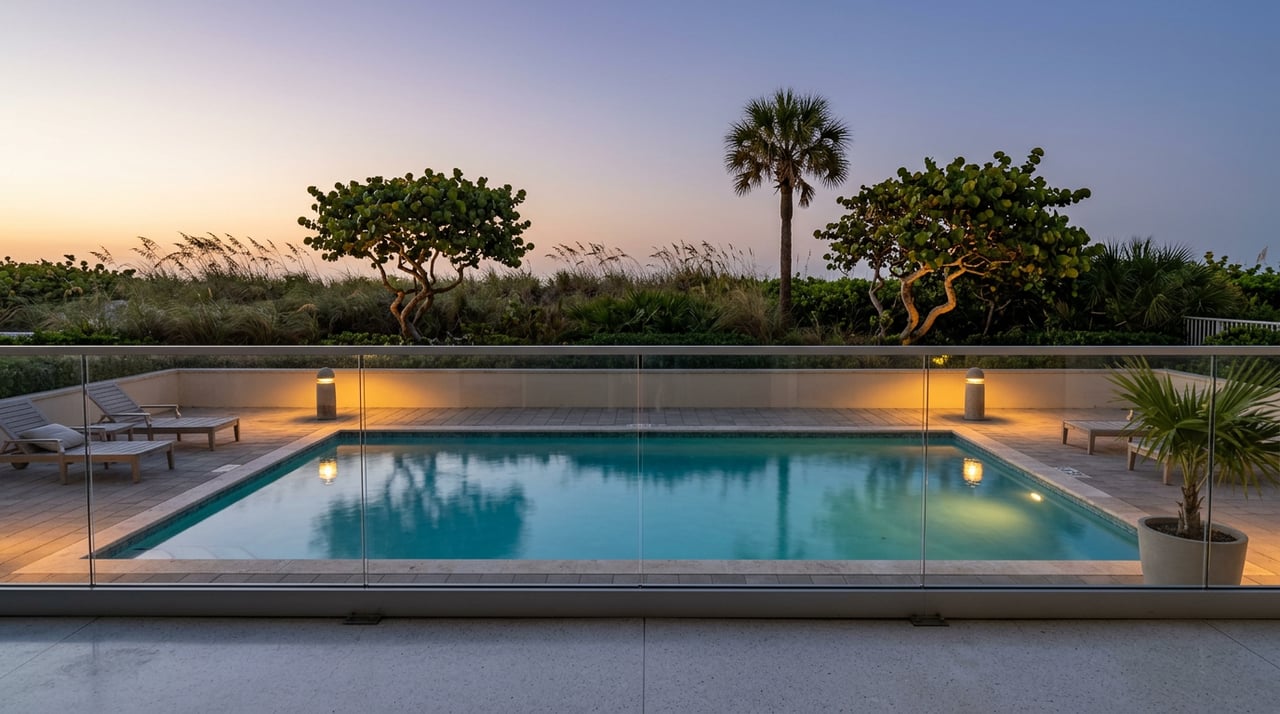
Dark and Quiet by Nine: The South Beach Rule Cape Marco Already Follows
August 27, 2026
August 27, 2026
By 9 p.m. most nights this summer, the balconies along Cape Marco's south end go quiet in a specific way. Blinds close. A lamp gets dimmed instead of switched off, because dimming to a turtle-safe bulb counts and flipping every switch doesn't matter as much as blocking the glow from reaching the sand. Then, a few hundred yards south at the South Beach entrance, another kind of night gets started: coolers, rods, headlamps bobbing past the barricade that goes up at dusk.
Both things are happening under the same ordinance, on the same stretch of beach, and only one of them is actually required by law right now. That's the part worth understanding if you live here, because the fight that made headlines this spring wasn't about the rule you already follow. It was about a second rule that never passed.
Marco Island's sea turtle lighting ordinance, City Ordinance No. 22-03, has been in effect for a few years, and the map it draws is specific: the lighting district runs along every beachfront property from Cape Marco to Hideaway Beach. That's not an island-wide label. It's a named boundary with Cape Marco literally as one of its two anchor points, which is a small but real signal of how central this stretch of coastline is to the whole conversation.
What the ordinance asks of beachfront residents during nesting season, May 1 through October 31, comes down to a short list:
Fines start at $250 for a first violation, and a second violation within a year goes automatically to the magistrate. That sounds like a system built for enforcement. In practice, it barely runs that way. Marco Island's code enforcement issued only five sea turtle lighting citations for the entire 2025 season, across the full lighting district from Cape Marco to Hideaway Beach. That is not a lot of tickets for a rule that touches every beachfront unit on that stretch for six months a year.
The reason this matters is that the loudest number in this year's debate points the opposite direction. Councilor Bonita Schwan, who lives in Cape Marco overlooking South Beach, cited a report from the Collier County Sea Turtle Protection Program showing that false crawls on Marco Island rose 86 percent over three years. A false crawl is what happens when a female turtle comes ashore to nest and turns back without laying eggs, often because she got spooked by light, noise, or an obstacle on the sand.
Put the raw 2025 figures next to 2024 and the increase is real: Marco Island recorded 118 nests and 309 false crawls in 2025, compared with 95 nests and 230 false crawls the year before. That's the most recent full season on record, since 2026's season won't close out until October 31.
But set that rise against the five citations issued for lighting violations in that same 2025 season, and a different story appears. If lighting were driving most of the increase, you'd expect enforcement numbers to be climbing too, or at least for code officers to be finding more violations to write up. They aren't. Marco Island Police Chief Tracy Frazzano told City Council that increased beach patrols requested this spring turned up zero reported violations tied to shark fishing activity as of early May. The honest read is that Cape Marco's stretch of beach runs mostly on voluntary compliance rather than policing, which is either reassuring or precarious depending on how much you trust an honor system to hold when a beach gets more crowded.
That crowding is exactly what prompted the ordinance that didn't survive. Schwan started pushing to restrict onshore shark fishing after residents told her they were seeing bigger groups and later hours on South Beach. She presented a white paper to Council on April 6, the topic got a public airing at a Shark Awareness Forum on March 2, and by May 4 the proposal on the table would have banned beach fishing from 9 p.m. to 9 a.m. during nesting season, with an early draft also requiring a permit for any group of ten or more gathered on the beach at night. Schwan pulled the permit requirement before the final vote.
It still didn't pass. The Florida Fish and Wildlife Conservation Commission sent word that the ordinance was likely unenforceable and possibly unconstitutional, since FWC holds sole jurisdiction over fish and wildlife regulation statewide, and Florida voters had already enshrined a constitutional right to hunt and fish through Amendment 2 with nearly 70 percent support. City Attorney Alan Gabriel told Council the regulation of shark fishing fell outside their authority. Councilor Tamara Goehler put it plainly during the debate: "we do not want a lawsuit." Vice Chairman Rene Champagne argued the city didn't need a new law when existing ones already covered the behavior that actually matters, saying the answer was to "enforce what's on the books today."
For David Boggs, who runs Marco Island Sharks and was the fisherman most directly named in the debate, the objection was personal as much as legal. Talking about what happens on the beach after dark, he said "it's not a party... it's not cruelty," describing it instead as something closer to a family tradition passed down at the water's edge.
The ordinance was withdrawn. Nothing about nighttime beach access changed.
That means the rest of the 2026 nesting season, running through October 31, plays out under the same rules that were already in place before this spring's debate started. The 9 p.m. lighting compliance stays mandatory for Cape Marco's beachfront buildings. Late-night shark fishing on South Beach stays legal, permitted under state rules rather than city ones. The South Beach entrance still carries a posted "Park Hours 8 a.m. to Dusk" sign attached to a barricade, and the Swallow Avenue lot is secured after hours, both aimed at limiting after-dark access to the beach itself rather than fishing specifically.
Don Evans, a Cape Marco resident who has raised the noise issue directly with the city, has described the core concern as less about banning fishing outright and more about the volume and lateness of the crowds it draws. City Attorney Gabriel has suggested there may still be a narrower workaround worth exploring, which means this is unlikely to be the last time it comes up at a Council meeting before the season ends.
If you live on that stretch of coastline right now, the practical takeaway is simple. The rule you're already following, closing the blinds by nine, works largely because residents choose to follow it rather than because anyone is checking. The rule that would have changed what happens on the sand after dark got argued publicly for months and then evaporated on a legal technicality. Both of those facts tell you something about how quietly enforced, and how genuinely unsettled, life on this end of the island still is heading into the last ten weeks of turtle season.
For residents who want to track how this plays out, or how it might eventually shape building rules, HOA guidance, or beach access on Cape Marco's south end, Becky Irwin Group keeps close watch on the civic decisions that touch daily life here, not just the transactions. If a future Council vote or a revised ordinance ends up changing what's allowed on that beach, that's exactly the kind of local detail worth having a trusted neighbor explain to you before it shows up in a headline.
August 27, 2026
August 20, 2026
August 13, 2026
August 6, 2026
August 6, 2026
Real Estate
July 24, 2026
July 23, 2026
July 16, 2026
Marco Island
July 10, 2026
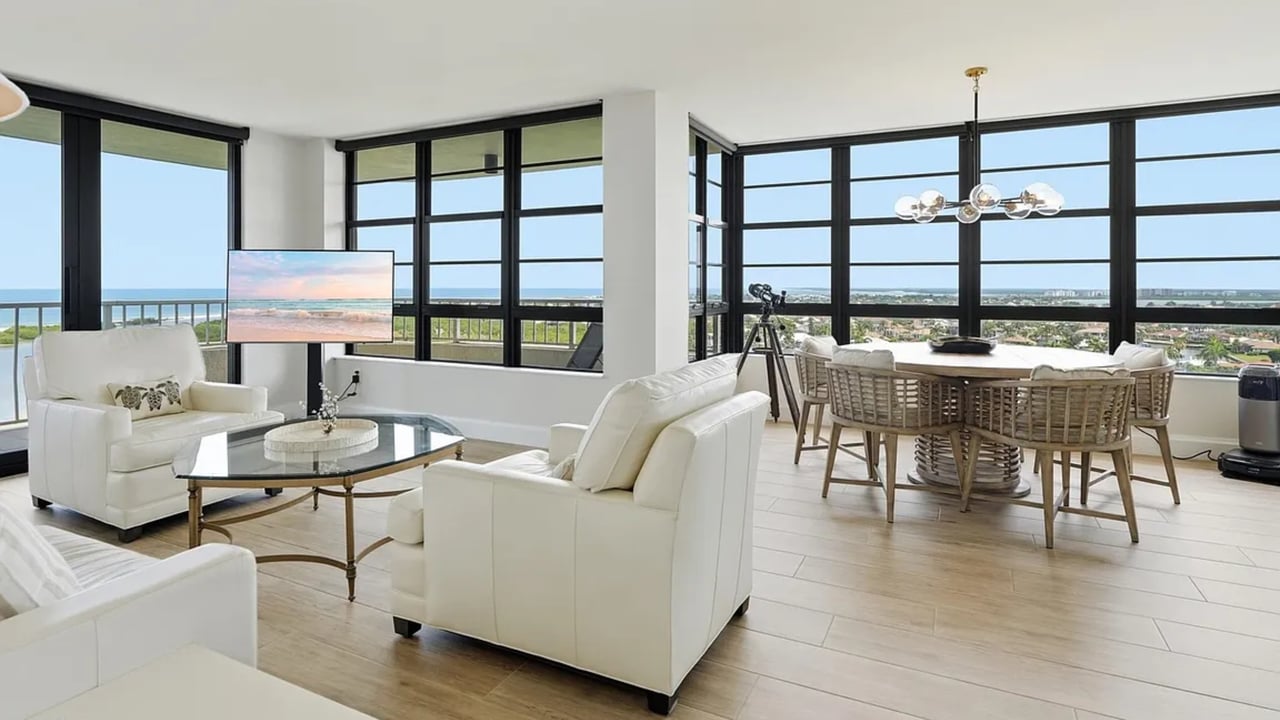
Rare 15th-floor corner unit in South Seas Tower 4, Marco Island. 2BR/2BA with Gulf views, resort amenities & weekly rental flexibility. $899,000. Tour today.
Explore unparalleled real estate expertise with a dedicated team committed to helping clients find their dream home. They are committed to client satisfaction and ensure a seamless and enjoyable real estate experience. Let them guide you through your home buying journey.
830 BALD EAGLE DR MARCO ISLAND FL 34145